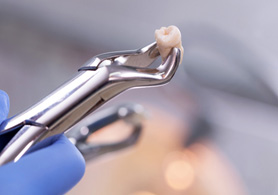
Have you been suffering from a severe toothache for several days now? This could be a sign of a severe infection that, if left alone, could eventually lead to worsening health problems and a gap in your smile. Luckily, in many cases, Dr. Rafiq will be able to save your tooth with root canal treatment in Irving. Thanks to advanced techniques, this procedure is simpler and smoother than ever. Contact our dental office right away if you think you might need root canal treatment.
Why Choose Daily Smiles MacArthur Dental and Orthodontics for Root Canal Treatment?
Effective Sedation Dentistry Available
Comfort Amenities for Added Patient Comfort
Trusted Dental Team Who Remains by Your Side
How Does Root Canal Treatment Work?
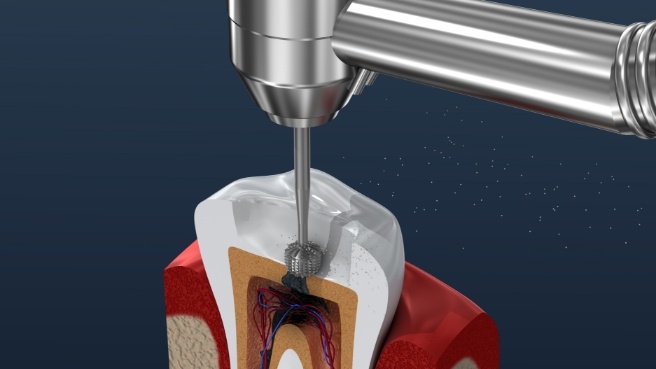
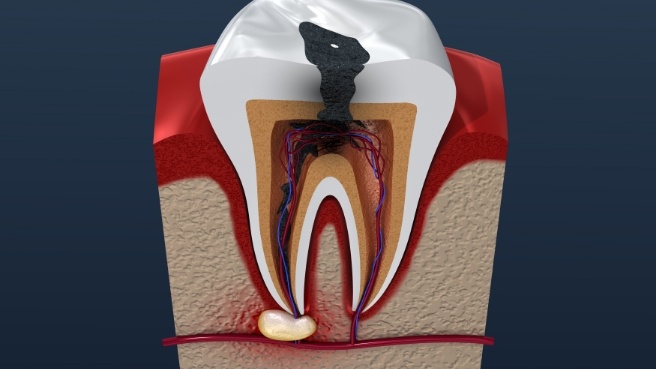
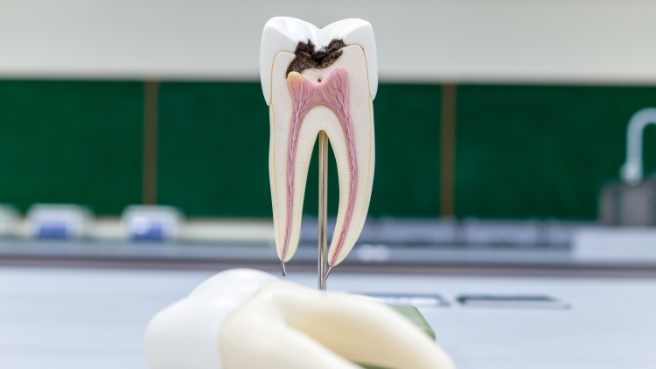
The tooth contains a soft collection of blood vessels, tissue, and large nerves collectively known as tooth pulp. Many toothaches occur when the pulp becomes badly infected. With root canal treatment, the infected area is removed from the tooth altogether, thus stopping the pain as well as further damage. (The tooth will still be able to function normally even without the nerves in the pulp.)
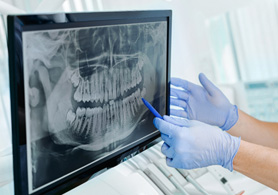
During the root canal procedure, your trusted dentist in Irving will take an X-ray to check the inside of the tooth and check whether the infection has spread to the surrounding bone. After that, the area around the tooth is numbed, and a rubber dam is placed so that the area stays dry. Dr. Rafiq will make a small hole in the tooth so that he can take out the pulp. The inside of the tooth is cleaned and then resealed. In most cases, you’ll also receive a crown sometime after the procedure since the tooth will be left somewhat fragile.
Why Do I Need Root Canal Treatment?
Pulp usually becomes infected when the tooth has been damaged in some way (whether it’s from a cavity or other kinds of physical trauma) that leaves the inner layers exposed. Eventually, an abscess could form; this is a pus-filled pocket that forms at the roots of the tooth. If left alone, an abscess will lead to:
Swelling in the face, neck, or head, making it difficult to breathe in some cases.
Bone loss in the jaw.
Spreading of the infection to other parts of the body. (In rare cases, you could even develop life-threatening sepsis.)
If the damage is too severe, we may have no choice but to extract the tooth; if that happens, you might need to get a bridge or another kind of dental prosthetic so that you can continue to eat and speak properly. However, root canal treatment can help you avoid these complications.
Benefits of Root Canal Treatment
Little to No Discomfort: Despite what many patients might think, modern root canal treatment is typically no more painful than getting a filling. You might feel some discomfort afterward, but pain medication can help you control it.
Highly Successful: Root canal treatment has a 95% success rate; in many cases, the rescued tooth will continue to last you for the rest of your life.
Natural-Looking Restorations: Thanks to natural-looking fillings and crowns, most onlookers won’t be able to tell you even had a root canal performed in the first place.
Understanding the Cost of Root Canal Treatment
The cost of root canal treatment in Irving can vary based on several different factors. Our team is committed to
making payment as easy as possible by outlining a transparent cost estimate before you schedule your procedure as
well as filing any insurance claims on your behalf. With a top priority of minimizing your out-of-pocket cost and
keeping your smile healthy, simply ask our front desk staff for assistance, and we’ll be happy to walk you
through all of your payment options!
Factors That Affect Root Canal Cost
There are three main factors that can impact the cost of root canal treatment that Dr. Hirji will discuss with you
after your examination:
Where the affected tooth is located. Molars have more complex root structures that take more
time to treat and clear, leading to a higher cost.
The complexity of your situation. In many cases, Dr. Hirji can perform root canal treatment
in-office. However, if your infection has progressed or is too complex to handle in-house, you may require care
from an endodontic specialist.
Additional needed services. You will likely need a dental crown after your treatment, which
will incur its own separate cost.
Is It Cheaper to Pull a Tooth?
While it may sound like extracting the infected tooth may be the easiest option for you, that’s not typically
the case. While root canal treatment may be slightly less than a tooth extraction, there are several additional
details to consider before jumping to remove your tooth. For example, you’ll need to replace your tooth after
it’s extracted to keep your surrounding teeth from drifting out of place. This will be an added cost that will
far surpass that of getting a root canal. It’s always best to keep your natural teeth whenever you’re
able to!
Does Dental Insurance Cover Root Canal Treatment?
Most dental insurance plans will cover at least a portion of root canal treatment if you haven’t already met
your yearly deductible. Our team is proud to be in-network with most major PPO dental insurance plans and file
claims on your behalf regardless of your insurance network. We also accept Medicaid and CHIP. Please don’t
hesitate to contact our office to learn more about how dental insurance can cover your treatment
in Irving.
Other Options for Making Root Canals More Affordable
To help make your procedure as affordable as possible, especially if you’re uninsured, our practice offers
financing options as well as specials. We currently have a $20 limited emergency exam special for new and uninsured
patients. Our practice is also partnered with CareCredit to offer low-to-no-interest monthly payment plans to help
fit the cost of your care into your budget.
Root Canal FAQs
With so many rumors being circulated about root canal treatment, it’s hard to get the facts straight. That’s why we’ve compiled professionally answered questions about this widely misunderstood treatment below, for your convenience and peace of mind.
Are root canals painful?
It’s widely accepted that root canals are painful dental procedures; however, that’s actually not the case. The toothache that usually develops before you need the procedure can be incredibly painful, and root canal therapy itself actually acts to reduce your discomfort instead of causing it. Before the procedure even begins, we’ll apply a local anesthetic to the area, making it completely numb. We also offer sedation dentistry as well, so you can feel relaxed throughout the entire procedure. Ultimately, this procedure helps get rid of pain, not cause it.
What’s the recovery process for root canal treatment like?
The following few days after your root canal procedure, you’ll likely experience some discomfort, but nothing severe. We often recommend over-the-counter pain relievers, such as ibuprofen, to help you feel more comfortable while you recover. We’ll also provide you with some basic post-op tips to help you heal faster. These usually include:
Maintain a soft diet.
Continue brushing and flossing, taking special care around your treated tooth.
Maintain a healthy diet by avoiding consumption of sugary foods whenever possible.
Place a cold compress on your cheek to help with the pain.
Contact our office if you experience any out-of-the-ordinary symptoms.
What happens during a root canal?
After Dr. Rafiq, your dentist in Irving, numbs the area by injecting the anesthetic, he’ll create a small access area in your tooth so he can reach the infected pulp. Our team will remove this pulp and sanitize the inner chamber of your tooth, making sure no harmful oral bacteria linger. To rebuild the structure of the tooth after it’s cleaned out, we’ll place a substance called gutta percha in the access area. We’ll also craft a customized dental crown to provide your treated tooth with protection, strength, and restored structure so that you can continue using it comfortably.
How can I avoid needing a root canal?
The best way to avoid needing a root canal in Irving is to visit our office every six months for a dental checkup and teeth cleaning. That way, if there is a severe cavity or broken tooth that leaves your pulp vulnerable to oral bacteria, we can treat and protect it before the infection develops. It’s also vital to brush and floss every day at home to prevent tartar and bacteria from accumulating in your mouth.